
Drawing the Circle
And knowing what is.

The following is an edited transcription of a homily given on February 22, 2026, the First Sunday of Lent, at St. Matthew’s Church in San Mateo, CA. You can watch the homily here.
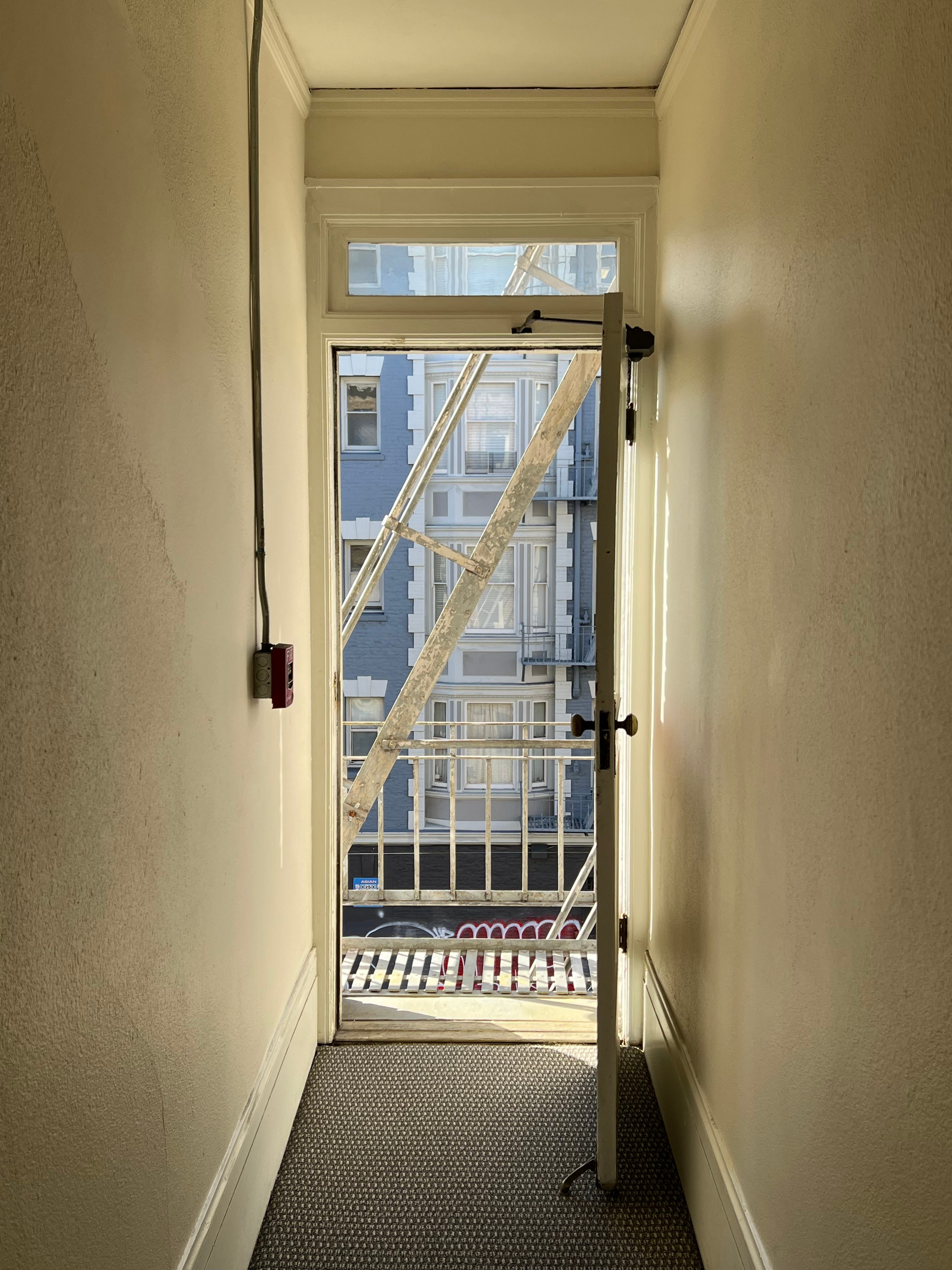
A Knock at the Door
I live in a small studio on the fourth floor of an apartment building in San Francisco. I am, by nature, something of an urban hermit. Hardly ever does anyone knock on my door.
So when someone did knock the other day, I was genuinely startled.
She was a young woman, college-aged, working for a disability advocacy group. A tenant in the building had reached out to her organization. She began by asking a few simple questions. “Does your elevator work?” I told her it hadn’t worked in over two years—and that apparently the landlord has decided it never will again, since the elevator doors have since been boarded over. “Where do you take your trash?” Down to the basement, I said. The trash chute on each floor was sealed off after complaints about improper use and rodents.
She was building a case, I could sense it.
She told me that people in the building with mobility issues were struggling and that parents with small children had to carry strollers down multiple flights of stairs just to get outside. She was there because someone had to be.
For me, the broken elevator and the sealed trash chutes are inconveniences. I can manage. But that conversation made me aware of something larger—a sense of powerlessness that settles in when the source of a problem is entirely out of reach.
The landlord has never knocked on my door. I don’t even know his name. And yet this distant, faceless entity shapes the daily reality of everyone who lives under that roof. Even the tenants who might want to push back tend to stay quiet, fearing retaliation, knowing they have few real protections or options.
The Weight of Powerlessness
This is not an unusual feeling.
Most of us know it in some form. Maybe it’s watching a son or daughter make choices that frighten you, and nothing you say seems to land. Maybe it’s the precariousness of your job in an economy that feels increasingly indifferent to the people inside it. Maybe it’s the slow accumulation of news that seems to confirm, day after day, that the world is beyond repair.
Powerlessness is, in many ways, a defining experience of our time.
The danger, of course, is when powerlessness slides into despair. And I think that is precisely what is at stake in the Gospel we hear every first Sunday of Lent—the temptation of Jesus in the desert.
The Circle in the Sand
Back in the late 1980s, the Martin Scorsese-directed film The Last Temptation of Christ offered an image of this moment that has stayed with me. It was a film not without controversy (as unpacked in Paul Elie’s latest book The Last Supper: Art, Faith, Sex, and Controversy in the 1980s), but this particular scene is worth sitting with.
Jesus, having been baptized by John, goes out into the desert. John has told him: if you want to hear the voice of God, that is where you must go. So Jesus goes. And he does something rather unusual. He picks up a rock and draws a circle in the sand around himself. He sits in the center of that circle and says aloud:
I will not move from this circle until I hear your voice, O God.
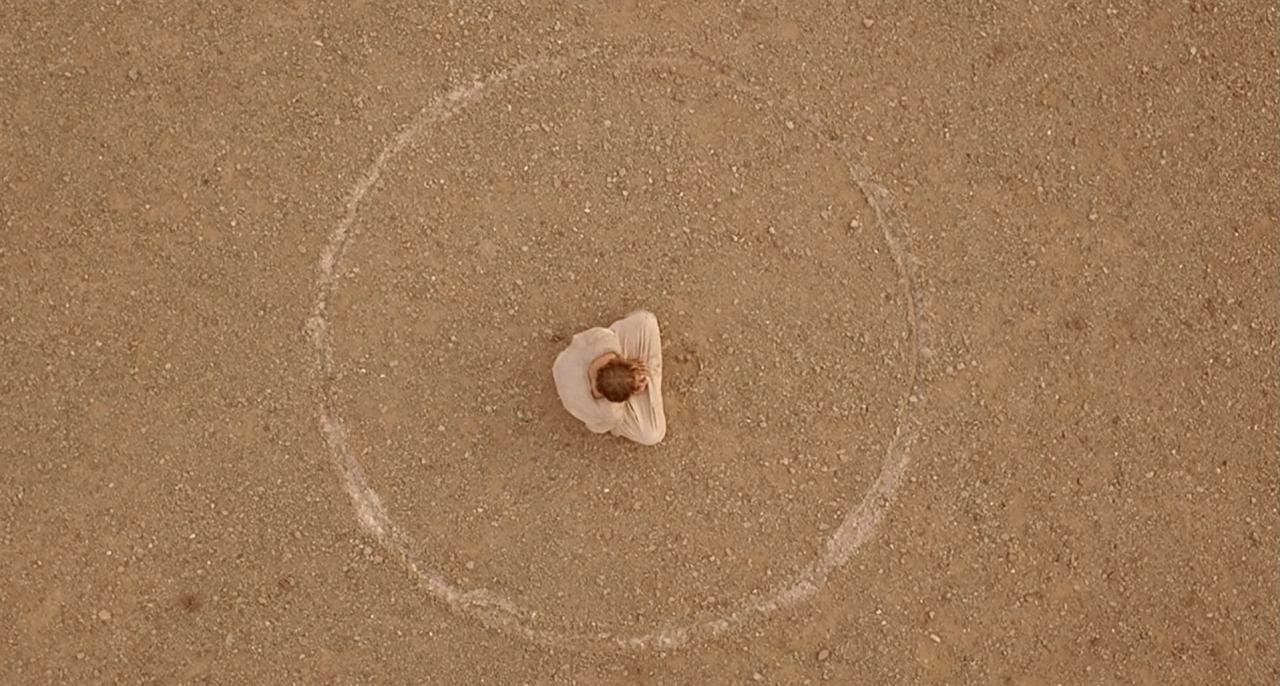
What follows are the temptations, which come to him in the form of a snake, a lion, and fire. But here is what strikes me: all of these temptations happen outside the circle. The circle is a boundary of presence. A place of protection. And eventually, when Jesus reaches his limit, he is comforted—ministered to by angels, as the Gospel tells us—from within that circle.
What Is Within Arm’s Reach
I keep returning to this image.
Because I think it names something true about where life actually takes place—and where we so often and so mistakenly go looking for it.
The landlord who decided my building’s elevator wasn’t worth fixing is so far outside my circle he might as well be a rumor. And yet I’ll admit that I have spent more mental energy on that abstract grievance than on the people I actually see every single day.
There are people in my building who have lived there for over forty years. They were there long before I arrived, and they navigate those same stairs every day—slowly, carefully, holding the railing. There are young parents I pass in the lobby, wrestling a stroller toward the door. There are neighbors whose names I may not even know yet, struggling to haul their groceries upstairs to their apartments.
Am I saying good morning to them? Am I pausing long enough to ask if they need a hand on the stairs? When someone is struggling with something heavy, am I stopping to help?
These are the people within my circle.
And it’s more than a little humbling to realize that in my preoccupation with what I cannot change, I have sometimes walked right past what I can.
What Lent Is Asking
This is not to say the systems that harm people don’t matter. They do. But there is something Lent is always trying to return us to. The present moment. The person in front of us. The life that is actually ours to live.
The things outside the circle will always be there, pulling at our attention: today’s news cycle, the scrolling feed, the distant powers that seem to determine so much. Lent is an invitation to ask a different question: what is inside our circle? What is right here, within arm’s reach?
Because that is where God shows up.
Within the circle: Breath. A heartbeat. The faces of the people we see every day, offering us more love than we notice when we’re busy looking elsewhere.
How do we say yes to that?
How do we let our hearts be open enough to receive what’s already being given?
It Starts Close In
Lent doesn’t promise that we can fix everything. But it does suggest that the more attentive we become to the life within the circle, the more that circle expands—and the things outside it, which once felt so overwhelming, begin to lose their grip. Even the despair, in some mysterious way, becomes less the final word.
It starts close in.
With the person in front of you.
With the breath in your body.
With the God who gave you both.
What is outside your circle that you need to “give up” this Lent?
“No daylight to separate us. Only kinship. Inching ourselves closer to creating a community of kinship such that God might recognize it. Soon we imagine, with God, this circle of compassion. Then we imagine no one standing outside of that circle, moving ourselves closer to the margins so that the margins themselves will be erased. We stand there with those whose dignity has been denied. We locate ourselves with the poor and the powerless and the voiceless. At the edges, we join the easily despised and the readily left out. We stand with the demonized so that the demonizing will stop. We situate ourselves right next to the disposable so that the day will come when we stop throwing people away…Kinship is what God presses us on to, always hopeful that its time has come.”
— Fr. Greg Boyle, S.J., Tattoos on the Heart
Thoughtful, as I juggle my own circle and invite others in to help. 🙏💕
Beautiful, and timely—as ever. Thank you for the blessings of your words and your careful attention, my friend.